
Why We Need St. Seraphim Rose
On Fr. Seraphim's ministry to the ‘Orthobros.’

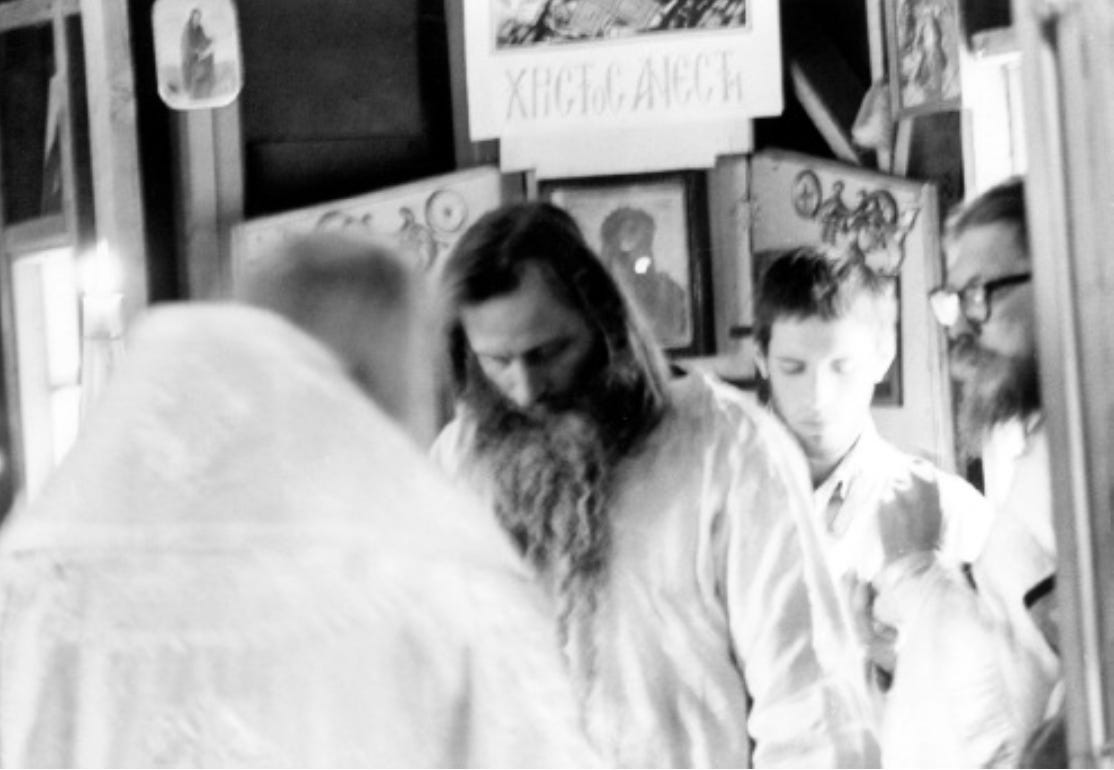
“If our converts will only keep the fear of God in their hearts and resolve to serve God no matter what, then all trials and temptations can be surmounted and they can save their souls.”
— St. Seraphim of Platina
Many Orthodox Christians are celebrating the canonization of Fr. Seraphim Rose. Some are not. Jeremiah Carey—one of my favorite Orthodox Substackers—had this to say:
Like many others, when I came into Orthodoxy, it was primarily under the influence of people like Met. Kallistos Ware, Fr. Alexander Schmemann, Olivier Clement, etc. Many people have lamented a shift in American Orthodoxy away from that sort of more positive and generous approach to something much more antagonistic, rigorist, fundamentalist. Though Fr. Schmemann wasn’t my favorite writer, his influence on Orthodoxy in America cannot be denied. Since Fr. Seraphim Rose has said in writing, among other things, that Schmemann (usually in combination with Meyendorff) was “fake Orthodox,” “an Eastern-Rite Protestant,” “an apostate,” a “traitor to Orthodoxy,” etc., his canonization is almost certainly going to make the shift even more pronounced.
I think his concerns are totally fair. (I also love Schmemann, Ware, et al.) By canonizing the Orthobros’ favorite saint, is ROCOR not advancing the Orthobroification of the American Church?
In my opinion, the he solution to “Orthobroxy” is… Fr. Seraphim himself.
The problem with our Extremely Online friends is that they don’t have the full picture of Fr. Seraphim Rose. They’ve seen his writings on evolution and aliens. They know his quote about how “Christ is the only exit from this world.” And that’s all good stuff! But it’s only a tiny fraction of what Fr. Seraphim wrote—of who Fr. Seraphim is.
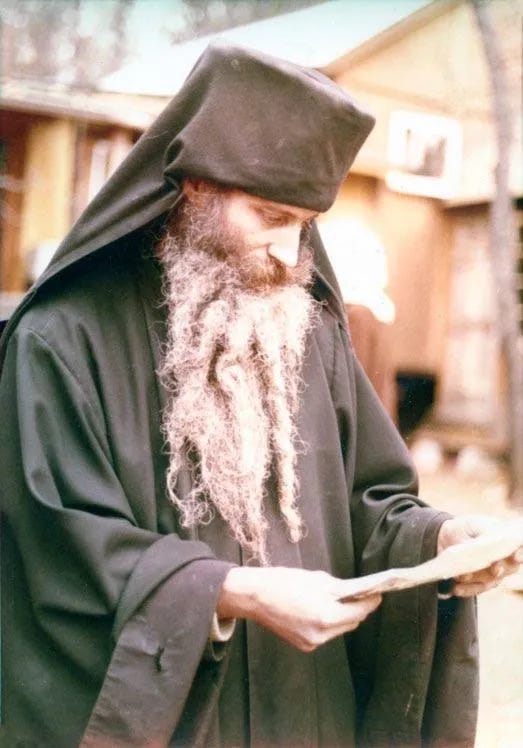
Fr. Seraphim Lowers His Dignity
First, it’s important to note how Fr. Seraphim matured—as a monastic, a theologian, and a spiritual father. Even his contemporaries noticed a “mellowing” that took place over his twenty years of monasticism.
For instance, there’s this beautiful passage from the Life and Works that I’ll quote at length:
Those who knew Fr. Seraphim recall that he had a wonderful sense of humor, though one which, like everything else about his personality, was understated. One story has been told by the same young monk whom Fr. Seraphim had talked to about mushrooms:
Once in the refectory, Fr. Herman was expatiating on the futility of modern technological civilization. “They build skyscrapers high into the air,” he was saying. “They compete to see who can build them higher. And they keep on building, building, building. When will it all end? They can only build so high—and then what?”
“Why then,” Fr. Seraphim said, “King Kong comes.”
Fr. Alexey Young notes that “Fr. Seraphim had a fondness for practical jokes which, unless you had been there, would have seemed very out of character. Nothing low-minded or cruel, mind you, but once in a rare while he would play a modest little practical joke on someone.”
One of Fr. Seraphim’s spiritual daughters provides an example: “Sollie [Solomonia] once told me a story which reflects Fr. Seraphim’s humor. It was at the monastery after a rain and there were puddles around, and he told Sollie to come and look at the duck that was in one of the puddles. He told her to be very quiet so she wouldn’t scare it, so she was. Then he began to chuckle softly, and she realized that it was a fake duck—a decoy!”
Another woman pilgrim, who had been introduced to the monastery only a year before Fr. Seraphim’s death, remembers being surprised at seeing Fr. Seraphim engaged in a snowball fight with the boys at the monastery. At first she thought that this looked out of place; but then, as she entered more deeply into Orthodox life, she realized that yes, it did fit here.
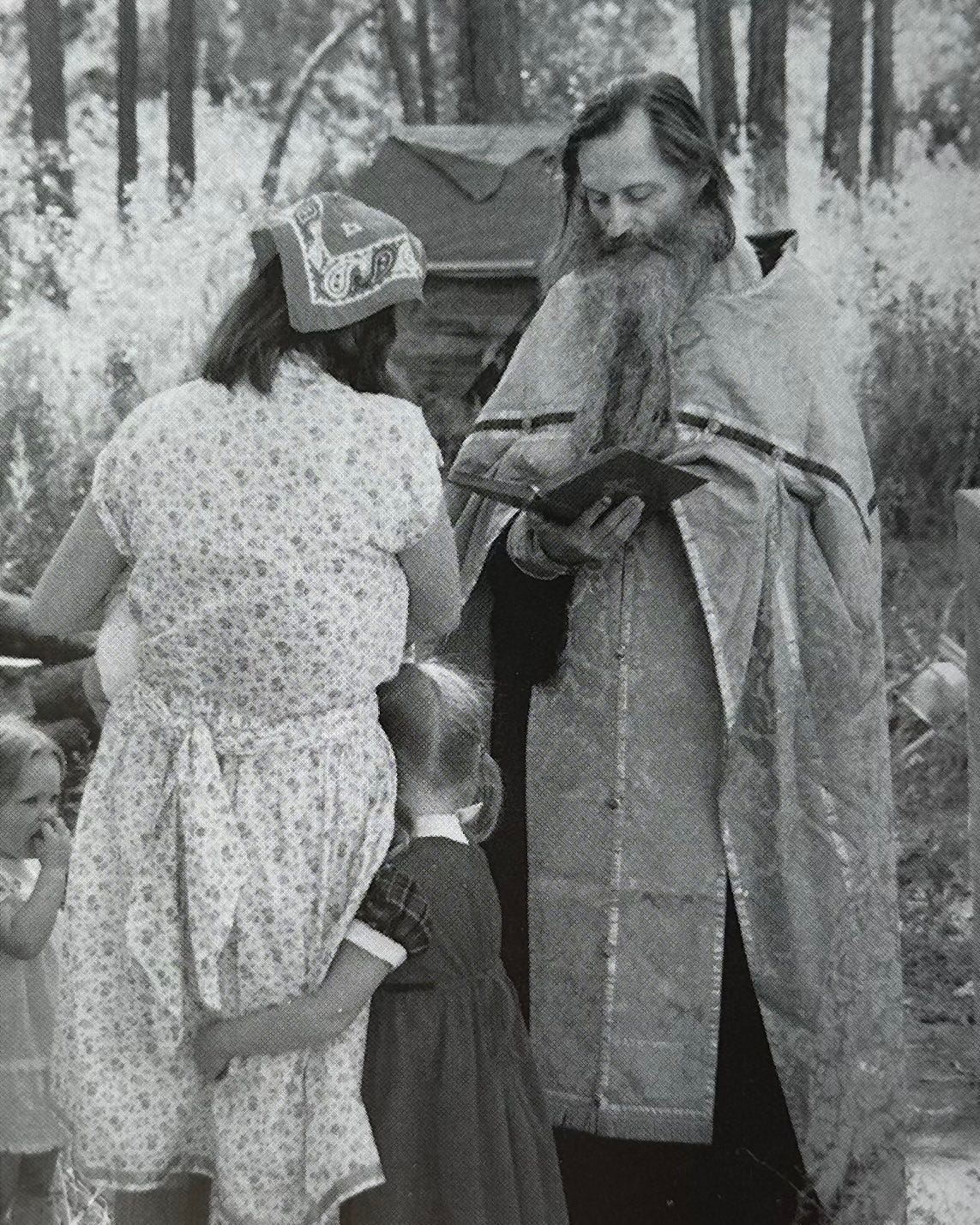
Fr. Herman has said: “When I first met Fr. Seraphim, he never would have lowered his dignity enough to start a snowball fight.” It was only in his later years, when he had become a pastor and had to care for the needs of American boys, that he could be seen doing this. Fr. Seraphim also played catch with the boys.
It’s important that we become familiar with this Fr. Seraphim. It’s important for his critics and skeptics; if anything, it’s more important for his supporters—especially the zealous, young, male converts who are (rightly) devoted to him.
We often fall into the trap of thinking that being Orthodox means having a long beard and wearing black sweatshirts with skulls and slogans like “Death to the World” on them. Reading (or pretending to read) thick volumes of theology and arguing with Prots and papists on the internet. Going around with a hangdog look, refusing to laugh or enjoy life—as if that’s what the Church means when she tells us to “lay aside all worldly cares.”
Fr. Seraphim shows us what true spiritual maturity looks like. And, in a sense, it looks childish. And why should we be surprised? The Lord said that unless we become like little children, we will not enter the Kingdom of Heaven. As he grew into his monastic vocation, Fr. Seraphim didn’t grow older: he grew younger.
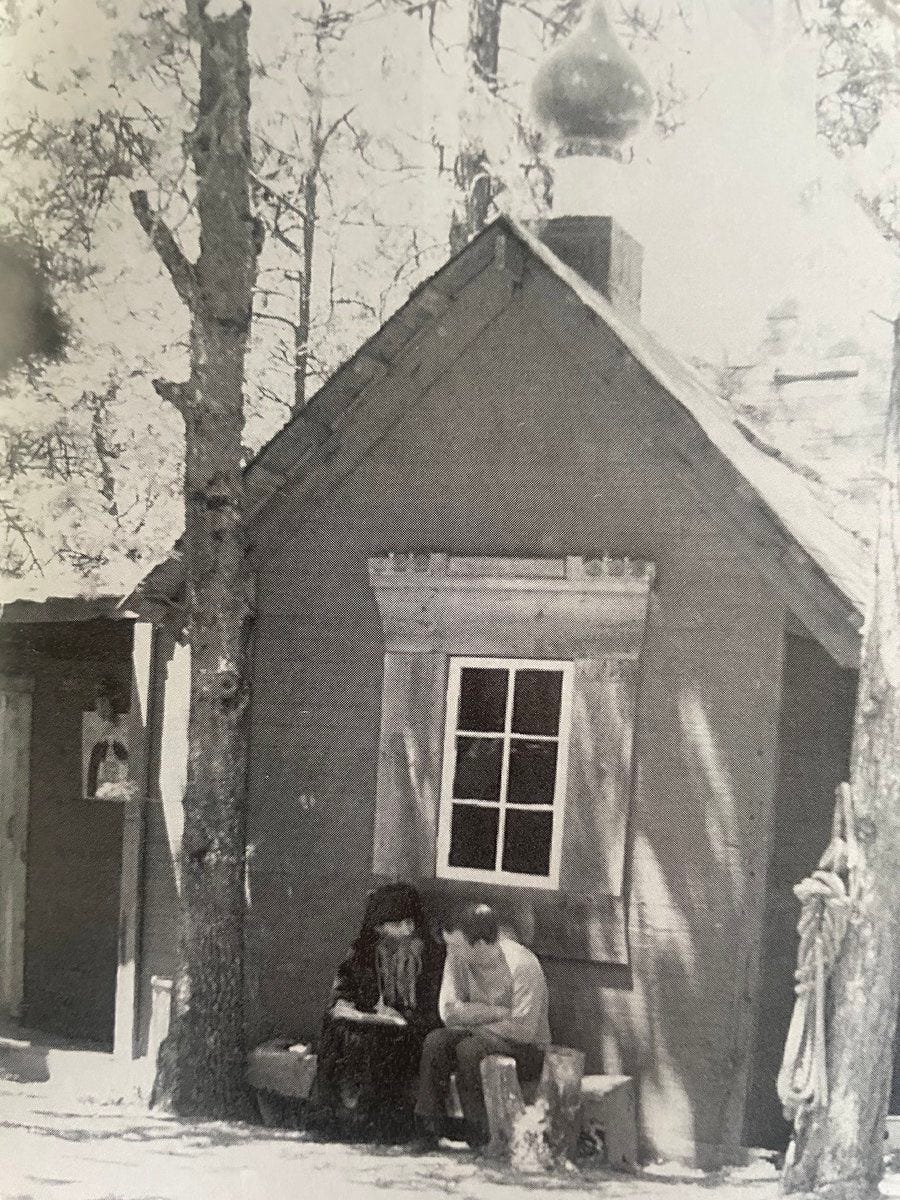
Mother Maria Skobtsova said that, even by pursuing the inner life, we must transcend the false dichotomy of inner/outer, of self/other. We must find the love of God in our own hearts; it must then flow into love of neighbor, and even love of enemy. So she speaks of an “inwardness that allows man to approach the other more closely, and with greater attentiveness, that opens him to the inner causes and motives of behavior of another soul, that creates a bridge between man and his neighbor…” That’s the sort of interior life Fr. Seraphim came to possess.
Fr. Seraphim vs. the Spiritual Baboons
Most of us know Fr. Seraphim thought mainly from his books—especially Orthodoxy and the Religion of the Future. And these are all phenomenal. Yet his books were written mainly for non-Orthodox readers. He wrote them to help his countrymen escape the fashionable errors of his day: nihilism, syncretism, etc.
It’s in his letters that we find most of his advice to Orthodox Christians. And here, one theme appears more than any other: the dangers of “correctness” or “rightness.”
To one spiritual child, for example, he writes: “We know many converts who grasp at ‘correctness’ like a baby’s bottle, and I think they could save their souls better by being a little ‘incorrect’ but humbler.”
To another, he says: “No matter how ‘right’ you may be on various points, you must be diplomatic also. The first and important thing is not ‘rightness’ at all, but Christian love and harmony. Most ‘crazy converts’ have been ‘right’ in the criticisms that led to their downfall; but they were lacking in Christian love and charity and so went off the deep end.”
In short, worry less about being “right” or “correct”; focus more on cultivating humility, love, and harmony. That, to me, is exactly the sort of advice our Orthobros need to hear. And how much more effective will it be, coming from Fr. Seraphim Rose?
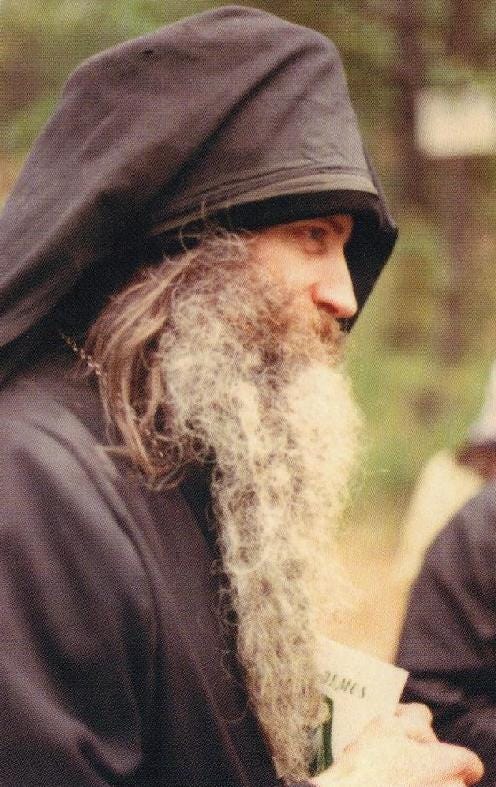
Lest there be any doubt, consider this letter he wrote to a new convert, outlining the three most important lessons he must learn:
As you prepare for Baptism, I would give you several words of advice.
1. Don’t allow yourself to get stuck on the outward aspect of Orthodoxy—whether the splendid Church services (the “high church” to which you were drawn as a child), the outward discipline (fasts, prostrations, etc.), being “correct” according to the canons, etc. All these things are good and helpful, but if one overemphasizes them one will enter into troubles and trials. You are coming to Orthodoxy to receive Christ, and this you should never forget.
2. Don’t have a hypercritical attitude. By this I don’t mean to give up your intellect and discernment, but rather to place them in obedience to a believing heart (“heart” meaning not mere “feeling,” but something much deeper—the organ that knows God). Some converts, alas, think they are very “smart,” and they use Orthodoxy as a means for feeling superior to the non-Orthodox and sometimes even to Orthodox of other jurisdictions. Orthodox theology, of course, is much deeper and makes much better sense than the erroneous theologies of the modern West—but our basic attitude towards it must be one of humility and not pride. Converts who pride themselves on “knowing better” than Catholics and Protestants often end by “knowing better” than their own parish priest, bishop, and finally the Fathers and the whole Church!
3. Remember that your survival as an Orthodox Christian will depend very much on your contact with the living tradition of Orthodoxy. This is something you won’t get in books and it can’t be defined for you. If your attitude is humble and without hypercriticism, if you place Christ first in your heart, and try to lead a normal life according to Orthodox discipline and practice—you will obtain this contact. Alas, most Orthodox jurisdictions today... are losing this contact out of simple worldliness. But there is also a temptation on the “right side” which proceeds from the same hypercriticism I just mentioned. The traditionalist (Old Calendar) Church in Greece today is in chaos because of this, one jurisdiction fighting and anathematizing another over “canonical correctness” and losing sight of the whole tradition over hyper-fine points... You yourself have had enough experience in life to avoid these temptations, which are actually those of the young and inexperienced; but it is good to keep them in mind.
In other words: don’t get hung up on being “correct,” don’t criticize other people, and get your Orthodoxy from people rather than books (or, we might add, the internet). Again, I can hardly think of better advice for our zealous young men.
At times Fr. Seraphim is so violently opposed to hyper-correctness that he almost sounds like a liberal! For instance, when he says:
The knowledge of correct dogmas is in the mind, and it is often fruitless, arrogant, and proud.... The true faith in Christ is in the heart, and it is fruitful, humble, patient, loving, merciful, compassionate, hungering and thirsting for righteousness; it withdraws from worldly lusts and clings to God alone, strives and seeks always for what is heavenly and eternal, struggles against every sin, and constantly seeks and begs help from God for this.
And those who succumb to hyper-correctness he calls “spiritual baboons”:
A great danger of our times and the movement of those who come to Orthodoxy is what one might call, in very down-to-earth language, the phenomenon of ‘spiritual baboons,’ i.e., people who are outwardly Orthodox and even pride themselves on being very correct in their Orthodoxy, but deep down are not really changed, do not grow in Orthodoxy, and remain very much a part of the modern world, which is rooted in anti-Christianity.
A Saint of Our Own
The reason so many of these zealous young converts identify with Fr. Seraphim is because he, too, suffered under the burden of our hedonistic, nihilistic Modernity. And, like us, he took refuge in the Holy Orthodox Church.
Like so many of us, he was a little overzealous at first. And yet—through ascetic struggle, deep study, fervent prayer, painful experience, and good old-fashioned life experience—his Orthodoxy passed from the “mind” and into the “heart.” He learned to become more strict with himself while also growing more gentle with others.
To put it another way, he found the correct channel for his zeal: the love of God and neighbor. After all his struggle, he discovered a deep and abiding joy, which shone from his face like the Light of Tabor.
In this way, both in his own life and in his pastoral writings, Fr. Seraphim became the model for all American converts. His canonization is not a symptom of “Orthobroxy” but its antidote—or, rather, its transfiguration.
Our only way out is to follow in his footsteps.
St. Seraphim of Platina, pray to God for us.
Appendix: More Quotes
Here are some more quotes from the Life and Works and the Letters that I didn’t have space for in my essay, but that are absolutely relevant to this conversation.
“There must be more heart in our Orthodoxy and less ‘canonical logic,’ which leads to discord and schism.”
“Sometimes one’s zeal for ‘Orthodoxy’ (in quotes) can be so excessive that it produces a situation similar to that which caused an old Russian woman[b] to remark about an enthusiastic American convert: ‘Well, he’s certainly Orthodox, all right—but is he a Christian?’ To be ‘Orthodox but not Christian’ is a state that has a particular name in Christian language: it means to be a pharisee, to be so bogged down in the letter of the Church’s laws that one loses the spirit that gives them life, the spirit of true Christianity.”
“Their ‘strictness forces them to become so involved in church politics that spiritual questions become quite secondary. I know for myself that if I would have to sit down and think out for myself exactly which shade of ‘zealotry’ is the ‘correct’ one today—I will lose all peace of mind and be constantly preoccupied with questions of breaking communion, of how this will seem to others, of ‘what will the Greeks think’ (and which Greeks?), and ‘what will the Metropolitan think?’ And I will not have time or inclination to become inspired by the wilderness, by the Holy Fathers, by the marvelous saints of ancient and modern times who lived in a higher world. In our times especially, it is not possible to be entirely detached from these questions, but let us place first things first.”
“Like Judas, everyone of us has passions in his heart. Let us therefore look at them. We can be caught with love for neatness, with love for correctness, with love for a sense of beauty: any of our little faults which we cling to can be a thing that the devil can catch us with, and then we can begin to think logically on the basis of that passion. From that logical process of thinking we can betray Christ, unless we watch over ourselves and begin to realize that we are filled with passions, that each one of us is potentially a Judas. Therefore, when the opportunity comes—when the passion begins to operate in us and logically begins to develop from a passion into betrayal—we must stop right there and say, ‘Lord, have mercy on me, a sinner! What am I doing?’”
“That is, if you bend, it is a sign of strength. We can see the same thing in human life. The person who believes in something to such an extent that he’s going to stand up and ‘cut your head off’ if you don’t agree with him—he shows his weakness, because he’s so unsure of himself that he has to convert you to make sure that he himself believes.”
“The one thing that can save us is simplicity. It can be ours if in our hearts we pray to God to make us simple; if we just do not think ourselves so wise; if, when it comes to a question like, ‘Can we paint an icon of God the Father?’ we do not come up with a quick answer and say, ‘Oh, of course it’s this way—it says so in such and such Sobor [Council], number so and so.’ Either we, knowing that we are right, have to excommunicate everyone, in which case we will go off the deep end, or else we have to stop and think, ‘Well, I guess I don’t know too much.’ The more we have this second attitude, the more we will be protected from spiritual dangers.”
Thank you
Fr Seraphim, pray for us!
My first encounter with Fr. Seraphim was with some of his more strident devotees online. That was enough to keep me well clear of him for a long time. Then I finally read his own words an was surprised at what I found. Not the stringent, hyper-zealousness (downright uncharitable even) attitudes I saw so often online, but humility, wisdom and spiritual insight. I think perhaps one of the challenges is how recent Fr. Seraphim was alive. Over the centuries, lots of things written by other saints have been lost or shed. There seems to be a sort of sifting that takes place, with some works being elevated and others being let go as not as important. That process hasn’t had a chance to happen yet for Fr Seraphim, though I’m sure it will.